Limestone and Rubble Foundations: Repointing, Parging, Rebuilding
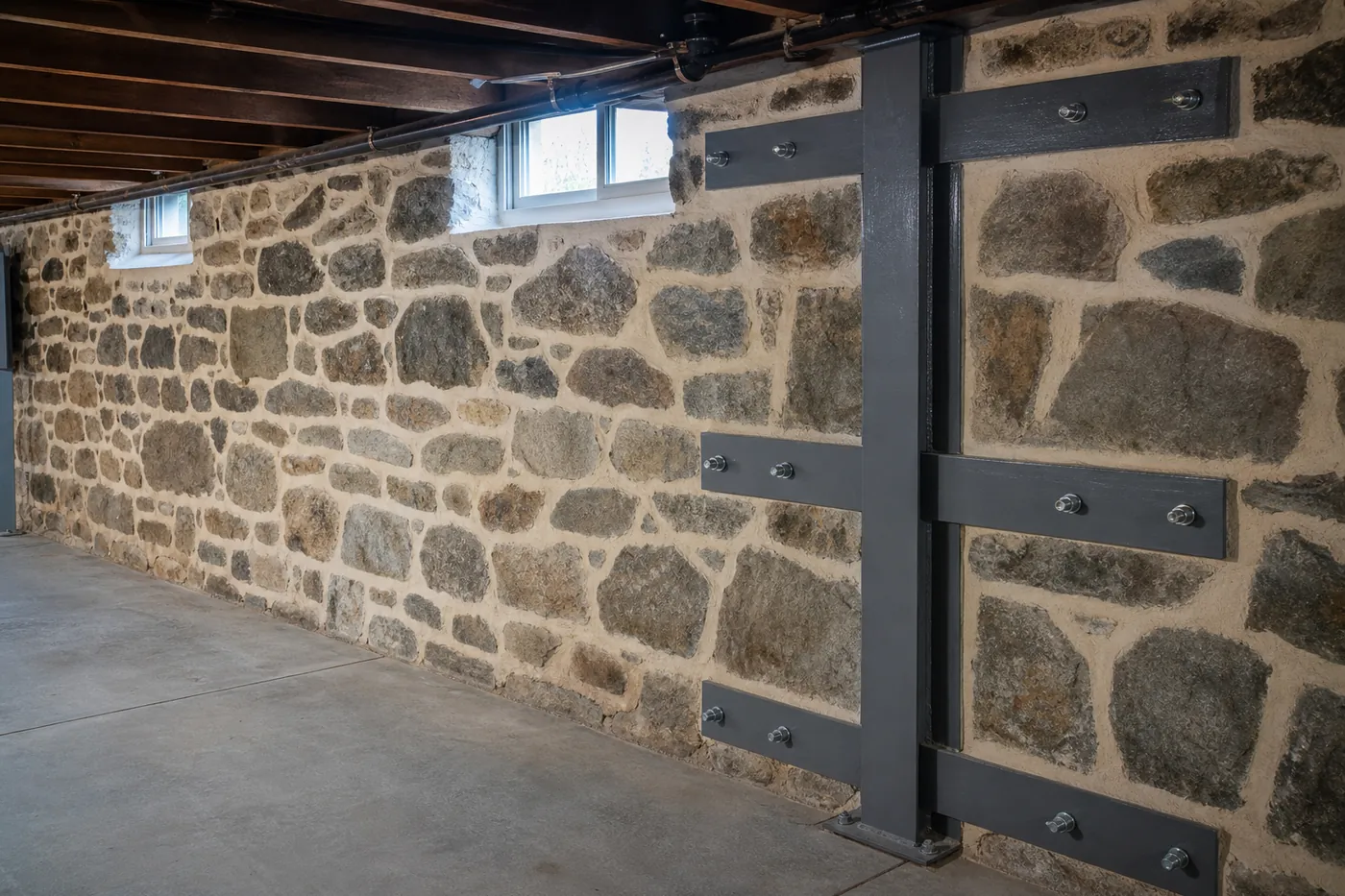
Limestone foundation repair is the most Minneapolis-specific job on this site. The city's oldest houses often stand on basements of local stone laid in soft mortar, and the usual complaint is not a crack but a slow loss: mortar turning to sand, stones loosening, a damp band along the bottom of the wall.
Most stone foundation trouble is in the mortar, not the stone. HomeGuide (2026) prices repointing a stone foundation at $5–$28 per square foot, or $3,500–$10,000 for a whole foundation. A section that bulges or has dropped stones is structural and may need bracing or rebuilding.
Where did Minneapolis stone foundations come from?
Much of the stone came out of the ground nearby. A 1918 U.S. Geological Survey bulletin on Minnesota building stone reports that Hennepin County's bedrock outcrops follow the Mississippi from Fort Snelling to the Anoka County line, mostly inside Minneapolis, and that the Platteville limestone there was quarried heavily for basements and retaining walls. Stone was quarried in Minneapolis and St. Paul between 1870 and 1900, the bulletin says, and by 1918 concrete had cut deeply into the demand for foundation stone. About 43% of Minneapolis homes date from 1939 or earlier (U.S. Census ACS 2020–2024), and many of the oldest still stand on stone or brick.
Why does an old stone basement shed sand?
The USGS bulletin noted that the local Platteville beds hold clay that breaks down when weathered, though the same stone stays durable and strong out of the weather. The mortar between the stones was usually lime-based and softer still. Water moving through the wall carries the binder away over decades, leaving sand at the base, open joints and stones that rock when pushed. A dark damp band along the lower wall, white crust on the face and peeling paint are the common signs. Minneapolis sale evaluators mark missing or deteriorated stone or mortar as below minimum standards.
Limestone foundation repair: repointing, parging or rebuilding
- Repointing (tuckpointing): raking out loose mortar and packing fresh mortar into the joints. For old limestone a mortar softer than the stone is usually advised, so the joint takes the wear instead of the stone. HomeGuide (2026): $5–$28 per square foot of stone foundation; Fixr (2022): $8–$40 per square foot for stone tuckpointing.
- Parging: a cement or lime coat over the face of the wall, inside or out, that slows surface moisture and evens a rough face. It does not hold back a wall that is moving.
- Bracing or partial rebuilding: for a bulge, a section that has lost stones, or a wall leaning in. HomeGuide (2025) notes stone walls often need custom bracing and sometimes tiebacks because of their irregular shape; the methods are on the bowing basement walls page.
Questions to ask before stone work starts
- Which mortar will you use, and why that one for this stone?
- Will you point the outside above grade as well as the inside? Open exterior joints let in the water that washes out the inside.
- Does any section bulge enough to need bracing or rebuilding first?
- How will water be handled: grading, downspouts, drain tile? Repointing a wall that stays wet does not last.
- Does this scope need a city permit, and who will pull it?
Compare the ranges in Minneapolis foundation repair prices.
Questions homeowners ask
Can I seal a stone basement wall with waterproof paint?
It rarely lasts on stone. Paint and masonry sealers can slow light dampness, but water pushing through open joints lifts them off, and a coating hides the joints an evaluator or specialist needs to see. HomeGuide (2026) prices waterproof paint at $2–$10 per square foot. Repoint the joints and deal with outside water first, then coat only if the wall stays dry.
What has changed in the basement or around the house?
Sand on the floor, a crack that grew, a porch that lifted, water after the thaw: any one of these is a fine place to start. One independent foundation and basement specialist serving Minneapolis reads it and replies.